
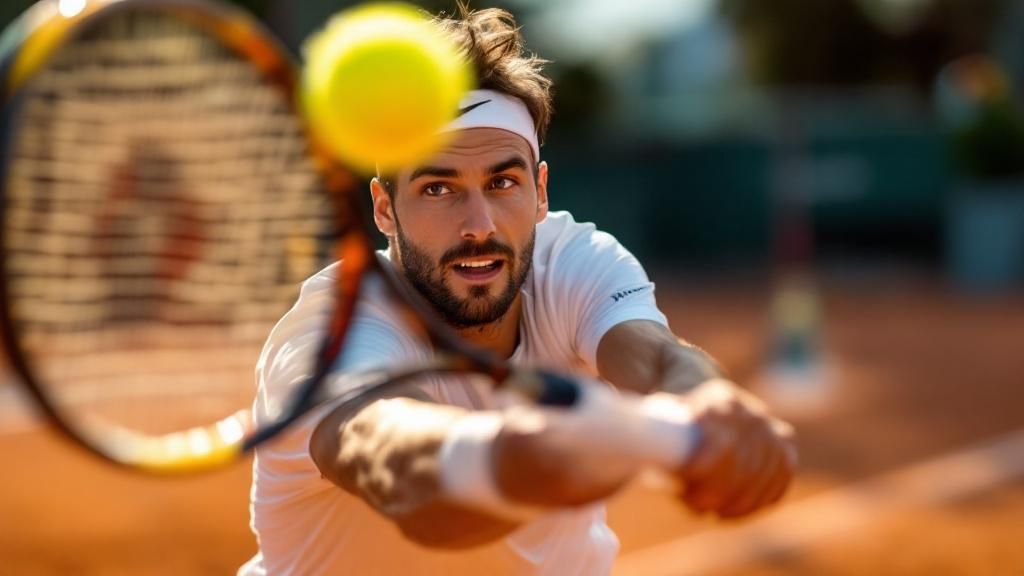
Britain’s Jack Draper has withdrawn from the upcoming Monte Carlo Masters as he continues his gradual return from an arm injury. The 24-year-old, who has played three tournaments since returning to competitive action in February following a six-month absence, has opted out of the prestigious event, which begins on 5 April. Despite showing strong performances with a victory in Dubai and a notable win over Novak Djokovic at Indian Wells, Draper feels pursuing recovery in London is the wiser course of action. The decision underscores his cautious approach to recovery, with nearly half of the season still to come. Draper has joined fellow withdrawals Djokovic and American top-10 player Taylor Fritz in declining the competition.
Measured Withdrawal Indicates Gradual Recuperation Trajectory
Draper’s choice to miss Monte Carlo represents a extension of the disciplined approach he and his coaching staff have adopted since his arm injury first emerged during the previous clay-court swing. Rather than chance exacerbating the bruised bone by competing in the demanding European clay season, the British competitor has opted to prioritise sustained physical condition over short-term tournament appearances. This approach has already guided numerous key decisions, including his withdrawal in the US Open before his second-round match and his choice to skip the Australian Open earlier this year. The strategy demonstrates a valuable insight from his problematic injury record.
With roughly eight months of the season remaining, Draper clearly feels no urgency to compete at Monte Carlo despite his lately impressive results. His practice programme in London will allow him to build his fitness at a measured pace and refine his game removed from the pressure of professional tour competition. The timing of his comeback to grass-court play at Queen’s and Wimbledon, where he will be a major home draw, appears to be the key objective for full readiness. This measured strategy, whilst somewhat frustrating in the near term, demonstrates a mature outlook and self-awareness about the demands of professional tennis at the top level.
- Draper training in London to increase fitness steadily
- Serving arm injury remains main worry for squad
- Grass-court season at Queen’s Club and Wimbledon approaches
- No cause for concern regarding withdrawal decision
Impressive Initial Results In spite of Setback
Despite his conservative approach, Draper has already demonstrated that his comeback is advancing positively. Since returning to competitive action on 23 February, the 24-year-old has taken part in three ATP Tour events across five weeks, highlighting his quality and resilience. His display at Indian Wells proved especially impressive, where he achieved an impressive win over Novak Djokovic, the 24-time major champion, on his way to reaching the quarter-finals. These results indicate that his physical condition is developing progressively, and his competitive form remains sharp despite the prolonged absence.
His first outing in Dubai set the tone for his return, with Draper claiming a tournament victory that provided both confidence and momentum heading into the North American hard-court swing. However, his subsequent loss to Reilly Opelka at the Miami Open served as a timely reminder of the work still needed. Nevertheless, Draper’s own evaluation that he is “feeling good” physically holds significance given the calibre of opponents he has faced and the quality of tennis he has delivered in recent weeks.
Dubai Success and Indian Wells Victory
Draper’s decision to start his return in Dubai proved inspired, with the British competitor securing victory in his opening tournament back after half a year away from competitive tennis. The victory provided an perfect foundation for confidence and showed that his serve had sufficiently recovered to withstand the demands of professional play. This achievement set anticipation for the subsequent hard-court Masters tournaments in North America.
His showing at Indian Wells elevated his return story to a new dimension. Overcoming Djokovic, a competitor with unmatched pedigree and accomplishment on the professional tour, constituted a major victory and pointed to Draper’s tennis was genuinely returning to the standard anticipated of a player who reached the US Open semi-finals. The quarter-final run underscored his competitive standing despite the lengthy absence.
The Upper Limb Injury Difficulty and Extended Approach
Draper’s choice to miss Monte Carlo reflects a continuation of the careful strategy his team has adopted towards his left arm problem, which initially created difficulties during last year’s clay-court swing. Rather than seeking to compete through discomfort as he originally attempted, the British player and his support team have benefited from past mistakes. The damaged bone in his racket arm persists as an issue that demands careful management, notably because of his history of physical setbacks throughout his career. This careful approach demonstrates wisdom in appreciating that immediate benefits are not worth jeopardising long-term potential.
With roughly eight months of the season still remaining, Draper recognises that playing in Monte Carlo, one of the ATP Tour’s most esteemed events, would constitute an unnecessary risk at this critical juncture of his recovery. Instead, he has opted to remain in London, maintaining his training regimen and building his physical conditioning away from the pressures of tour play. This decision reflects his dedication to returning to full fitness rather than simply getting back to action. The upcoming grass-court season, culminating at Wimbledon, represents a more suitable target for his full competitive return.
- Arm injury first caused pain throughout the 2025 clay-court swing
- Previously withdrew from the US Open and shortened 2025 season
- Skipped Australian Open in 2025 as a precautionary measure
What Awaits for British Tennis
Draper’s withdrawal from Monte Carlo occurs during a period when British tennis is experiencing a period of transition. His drop to 25th in the world rankings and loss of British number one by Cameron Norrie highlights the impact of his extended absence from competitive play. However, the 24-year-old’s careful handling to his comeback indicates he stays confident in his capacity to regain his former status after complete recovery. The composure evident now might prove instrumental in establishing a more sustainable career trajectory ahead, especially considering the physical toll of top-level tennis at the top level.
The wider picture of Draper’s position also emphasises the critical nature of handling injuries wisely within the modern game. His readiness to take unpopular choices—avoiding prestigious events like Monte Carlo—demonstrates a maturity that often eludes younger competitors eager to establish themselves. With the grass-court season approaching, Draper has established himself as a real threat on home turf, where his game has long been successful. Success at Queen’s and Wimbledon could rapidly revive his ranking and reputation, vindicating the conservative approach his camp has implemented throughout this comeback period.
Grass Court Campaign Beckons
The transition from clay to grass constitutes a natural opportunity for Draper to accelerate his return to competition. Having skipped the arduous European clay-court swing, he will arrive at Queen’s and Wimbledon with fresh legs and a well-prepared serving arm. These tournaments, especially Wimbledon, carry considerable importance for British players, and Draper is expected to be among the home crowd’s star attractions. A strong showing on grass could deliver the momentum needed to justify the cautious choices made during this comeback period.
